About
The Granville Entertainment District is one of Vancouver’s most historically layered and recognized cultural streets. Its neon lighting, theatres, mid-century signage, and long legacy of nightlife and entertainment are a rare and defining example of Vancouver’s identity. Granville Street has also been a place where the city’s social, housing, and safety challenges are visible.
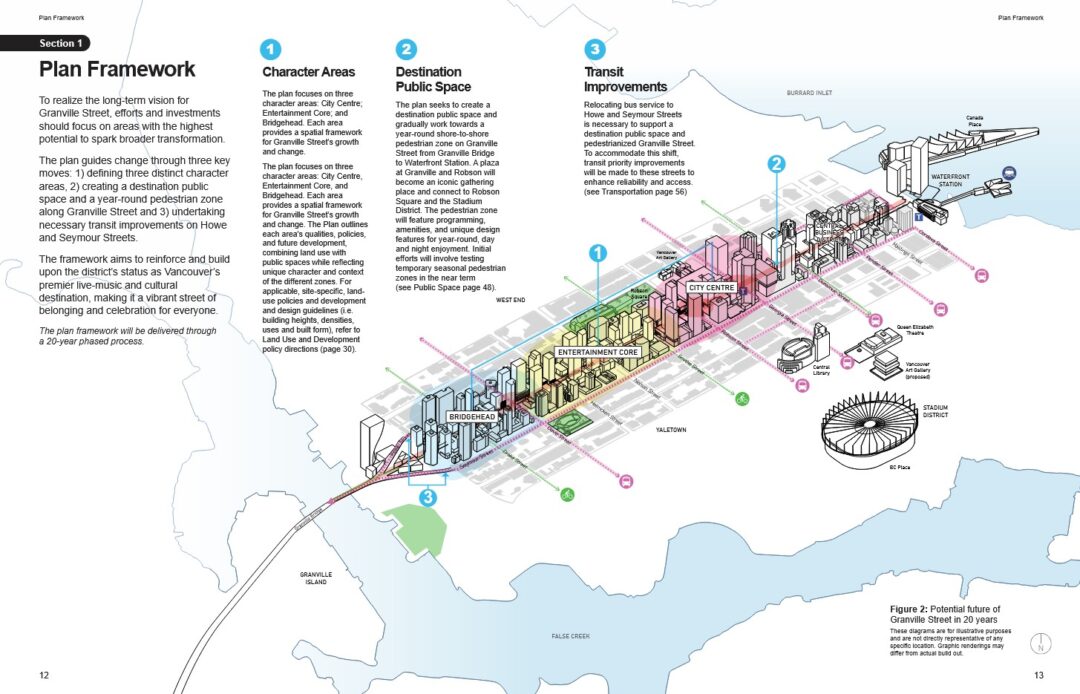
In June 2025, the Vancouver City Council approved a 20-year Granville Street Plan that sets in motion major zoning changes, redevelopment incentives, design guidelines, public realm transformation, and the possibility of partial or full pedestrianization. While the Plan is proposed as a revitalization strategy, it also represents one of the largest re-shapings of the street since the 1980s.
Brief Timeline
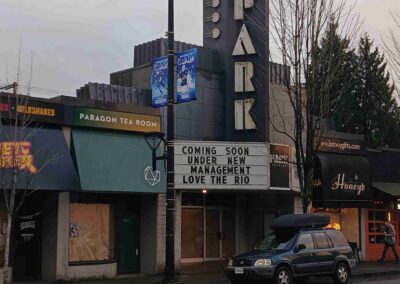
Theatre Row (early–mid 20th century): After the completion of the Granville Bridge in the late 19th Century the area developed into one of the most iconic streets home to hotels and notable live music and theatre venues in Western Canada. Names like the Orpheum, Commodore Ballroom, Rio, and Vogue made Granville Vancouver’s cultural and entertainment heart, drawing crowds from across the region.
Neon City (1950s–1970s): By mid-century, Granville became known for its neon signage and nightlife, this glowing urban theatre of light that gave the street a distinct, flamboyant identity. The “neon-corridor” aesthetic made Granville a visual landmark.
Increasing Issues, SRO Conversions, and Social Shifts (1980s–2000s): As the entertainment economy evolved, many of the historic theatres declined or closed such as the Vancouver Opera House. Some of their buildings were repurposed; others lost their original use altogether. Over time, portions of the street were converted to low-cost housing, including Single Room Occupancy (SRO) buildings. Today, Granville’s streetscape contains elements of each era: some neon, some old façades, some empty storefronts, some social-housing buildings.
Heritage and Neighbourhood Considerations
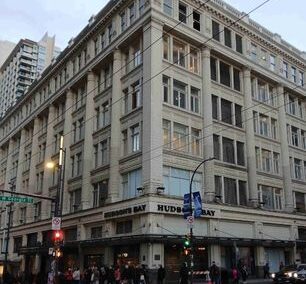
Granville Street is one of Vancouver’s most culturally symbolic corridors. Its heritage is not just architectural, it is experiential with elements of intangible heritage: theatres, neon, nightlife, pedestrian crowds, entertainment venues, music, and subculture. The Granville Street Plan recognizes these attributes and introduces a suite of Special Design District Guidelines intended to protect and reflect this character and prioritize heritage designation of a few notable buildings. Some of the proposed densification and building schemes, while ambitious in preserving heritage elements, might encounter unforeseen issues in the future.
For context, older buildings such as the ones on Granville Street were built using construction techniques, materials, and design logics that do not easily accommodate contemporary demands (larger floor spans, heavier loads, modern HVAC/electrical/plumbing, seismic upgrades). When developers try to retrofit or densify such buildings structural weaknesses often emerge. This can lead to serious problems: sagging floors, cracking walls, moisture or condensation issues, or stress on façades and load-bearing walls. Over time these challenges can force building owners to choose between extensive (and expensive) interventions, or partial/complete demolition.
Experience in Vancouver shows that rezoning and development proposals can put historic buildings at risk, as heritage retention is often secondary to density, height, and financial viability considerations. On a related note, despite being celebrated in policy language, neon signage, theatres, and live entertainment venues may gradually be marginalized if redevelopment priorities shift toward more conventional commercial uses.
The Plan also tries to address long-standing issues: safety, cleanliness, business decline, addiction, and the concentration of SROs in deteriorating buildings. There is strong public desire for change, and equally strong concern about displacement, gentrification, and whether social supports will follow relocated tenants.
What is in the Plan?
City Council’s approval includes:
Near-term initiatives (1–3 years):
- Zoning and regulatory updates, including a new Interim Rezoning Policy
- Pedestrian-priority pilots and early transit routing changes
- New district management model (safety, programming, maintenance)
Long-term initiatives (5–20 years):
- Major redevelopment opportunities and new mixed-use buildings
- Expanded cultural space and improved public realm
- Special Design District rules for architecture, heritage signage, lighting
- The potential pedestrianization of multiple blocks of Granville
Alongside these changes are major shifts in land use connected to housing and social issues: supportive housing relocations and SRO conversions have already been announced, such as the recently announced 2026 closure of the Luugat generating intense public and media scrutiny. Decisions about SRO housing on Granville do not end at the district’s boundaries; they carry real consequences for surrounding neighbourhoods and for residents whose stability depends on access to nearby services and community networks.
As Reported in the CBC
Wendy Pedersen with the advocacy organization SRO Collaborative said that the push to close social housing is not being accompanied with more spaces being built — especially as Vancouver council voted to freeze future increases of supportive housing buildings earlier this year.
Public feedback shows strong support for revitalization overall—yet widespread skepticism about execution. Key issues include:
- Safety and social disorder are the top recurring concern
Potential displacement of SRO and supportive-housing residents - Risk that pedestrianization weakens transit accessibility
- Questions about whether cultural and heritage spaces will truly survive
- Doubts about long-term management and cost of maintaining the district
Why on Top 10
Granville Street Plan is a transformation and proposed densification that can fundamentally alter what makes the street unique. While the project promises culture and activation, it also introduces new development pressures which risks erasing important aspects of heritage.
The Plan includes new policies for heritage and cultural character, including safeguarding neon signage, theatres, and entertainment uses. These are positive tools—but not guarantees.
The plan’s design guidelines alone may prove insufficient if they are treated as by discretion rather than enforceable tools during rezoning and development approvals. Lasting improvements remains an open question, especially as priorities, funding, and political leadership change.
Redevelopment incentives could also lead to significant loss of historic buildings if heritage protections prove weaker than development pressures. Granville’s heritage value is inseparable from its mixture of scale, signage, theatre façades, and nightlife. If these elements are eroded or piecemealed away through rezoning decisions, the street could lose the very identity the Plan claims to enhance.
Granville Street is one of the last remaining examples of Vancouver’s cultural and entertainment heritage. It is also a street struggling under the weight of complex social issues. The Granville Street Plan has potential to revitalize, reconnect, and restore the public life of this district, but it could also accelerate erasure through commercial redevelopment and unsustainable expectations.
The tension between preservation and redevelopment will be high. Granville’s future will depend not only on good design guidelines and zoning tools, but on how they are applied, enforced, and funded over decades. Without consistent oversight, developers may treat heritage requirements as negotiable, leading to incremental loss of character; without stable long-term funding, district management, cultural programming, and safety initiatives may fade after initial excitement; and without rigorous review, intensification projects may overwhelm historic buildings or displace vulnerable communities.
Additional Resources:
https://www.shapeyourcity.ca/granville-street-planning?tool=map
We acknowledge the financial assistance of the Province of British Columbia.