Introduction
There is a severe pressure on many places in Vancouver that have made the city into what it is today. The insecurity over ‘what’s next?’ for the city’s buildings and public spaces where people live, work, consume and create is looming over everyday life. The much-debated approval of the City of Vancouver’s 2026 budget is one example of how, at the municipal government at least, life in the city is immediately associated with dollar value. The approved budget cuts will have significant consequences for city services and community resources, and the arts, culture and heritage fields in particular.
Celebrating its 25th edition, this year’s Top10 Watch List is concerned with some of the potential long-term consequences of decisions that are made today for the city’s built environment. Changes in Vancouver’s built environment will not just have implications for what the city looks like, but also for how and where people get to live, and experience and express what they value in the city – their heritage.
The 2025 Top10 Watch List emphasizes two aspects of the severe pressure existing on many of the city’s cherished places. It discusses how we can think about these changes in relation to how and why urban decisions are made. Second, the Top10 reviews some of the social history and merit that could disappear in time.
On the list
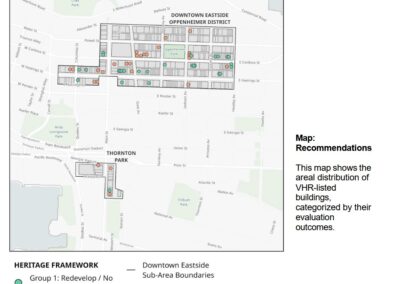
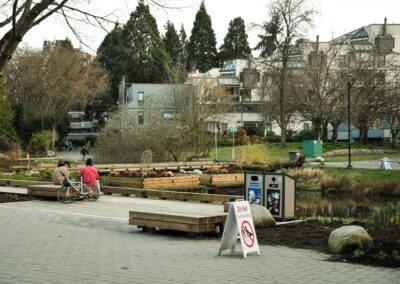
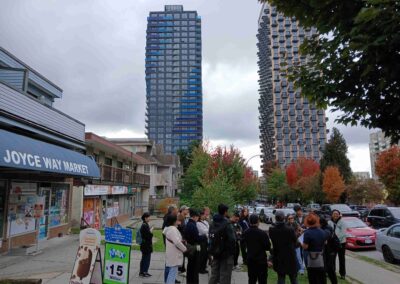
The Downtown Eastside (DTES) and False Creek South are two characteristic Vancouver neighbourhoods, each in their own ways representing important aspects of the city’s colonial history. A “Community of Neigbourhoods”, the DTES has seven distinct sub-areas and deep cultural importance for numerous communities. Located on land leased from the City of Vancouver, False Creek South was created in the 1970s as a social experiment and which became the starting point of a complete revisioning of the False Creek area. As what the future holds for both areas is uncertain, Heritage Vancouver considers Historic Urban Landscape and Cultural Landscape approaches as unique opportunities to capture and maintain the areas’ people-centred values during times of change.
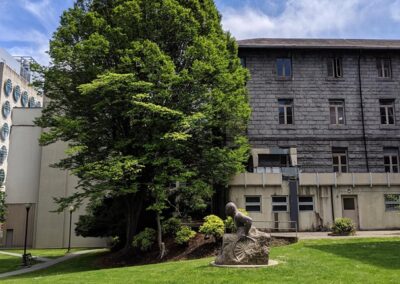
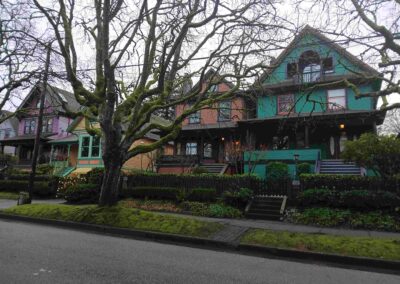
The conservation of heritage buildings has increasingly become a costly matter and the incentives to make up for conservation costs have become less interesting for developers and property owners. However, the reinvestment in a building as part of heritage conservation should never just be seen as a financial one based on material needs. Historic buildings carry meanings, evoke emotions and are triggers for stories. Many of the articles on this list seek to highlight these meanings, both appreciated and contested, and aim to explore what makes the conservation of places not straightforward but a complicated process.
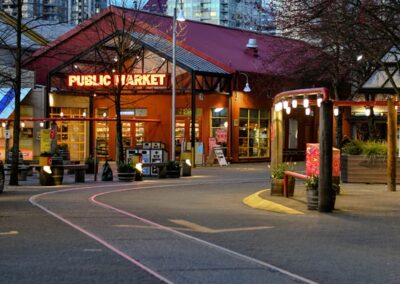
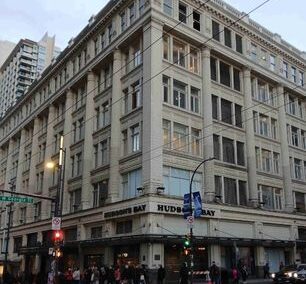
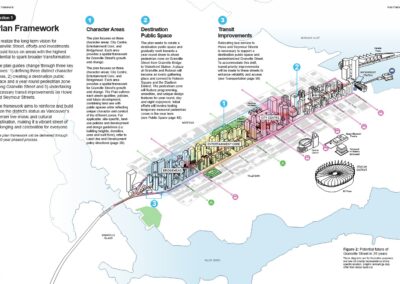
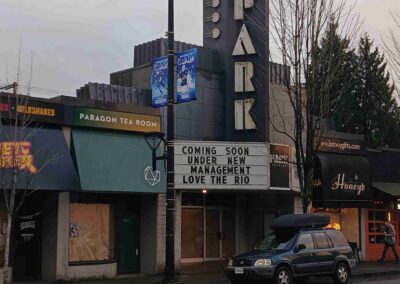
How do we go about the complex history of the Hudson’s Bay in relation to the conservation of its downtown building? And what to do with Granville Street’s built heritage? How can the idea of Granville Island as it was imagined in the 1970s be fostered when its economic model may no longer be viable? How can the conservation of smaller buildings remain interesting for homeowners, families or developers when costs of living in the city keep rising? Heritage Vancouver reflects on these and other questions in this year’s Top10 Watch List.
Special thanks to Ausra Ona, Archa Neelakandan Girija, and Victoria Lin for their work on this year’s Top10 list.
We acknowledge the financial assistance of the Province of British Columbia