About
A June public discussion event and video called The Uncertain Future of Granville Island released by popular Youtuber and video producer Uytae Lee drew attention to the difficult financial situation of Granville Island. The land is federally owned and managed by CMHC, the Canada Mortgage and Housing Corporation. The Island has a subsidy model where market rents paid by some businesses support more affordable rents for other small businesses, arts and culture organizations and free community spaces. But there is a requirement that Granville Island cover its own maintenance and because of the considerable repairs needed by many of the buildings on the Island, there is insufficient revenue generated to pay for repairs to buildings and infrastructure.
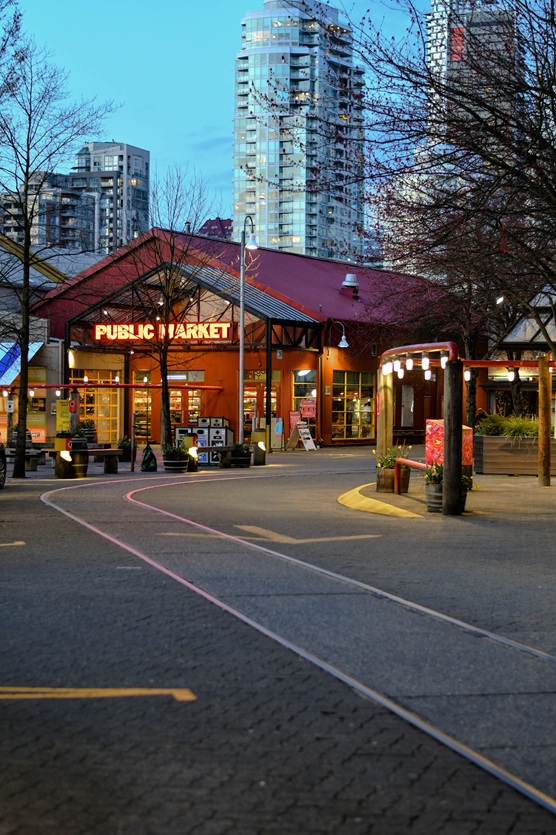
The Uncertain Future of Granville Island gives examples of the type of damage and costs to buildings such as the former Emily Carr University building, Cats Social House, and the Public Market building. It also covers several possible ways of raising this revenue to pay for major repairs.
One involves more development on the Island which in order to be more profit focused, might prioritize tourists and more corporate “earnings-focused” businesses rather than the original intent of supporting types of businesses that are less driven to maximize profit for the main sake of making more money. Under this approach, profit and perceived financial stability would be the main determinants of business tenants like a lot of redevelopment situations where it is hard to lease a space and survive unless you are an established big corporate business. Another would involve some form and proportion of government subsidy like some arts districts across North America. One additional approach that CMHC is floating is the idea of a Granville Island Foundation which would be a charity that collected donations from the public and use that money to support the financial sustainability of the Island and its mission.
At the public event, former Vancouver mayor and BC Premier Mike Harcourt voiced putting housing on Granville Island as a revenue generator. Many in the audience booed.
Why on Top10
A primary part of the heritage of Granville Island, what makes it important to many people, is the socially oriented values behind how the place was and is intended to work. Granville Island is an ecosystem putting small, local, independent businesses together with community amenities like community centres, playgrounds and arts and cultural organizations for a cultural experience, personal well-being and social gathering. These social purposes were prioritized over a purely commercial and profit-making exercise.
Arguably, people may feel these purposes are all the more meaningful, critical and at risk right now because much of Vancouver has become about creating financial value, growing big and becoming entrepreneurial as a city where solutions to social issues are left to business transactions. Areas of life many consider off limits to transactions because of their value as human experiences and moral principles are commonly commercialized: healthcare, education, housing, commemorative naming rights, access to arts and culture.
In 2020, CBC re-broadcasted a lecture by Mark Carney, as an economist, about the prioritization of financial values over human values and the growing influence of markets on policies affecting the public. He warns about our “approaching the extremes of commodification as commerce expands deep into the personal and civic realms. The price of everything becomes the value of everything.”
Although it may be encouraging that someone with such a high profile has pointed out this as a problem, and insisting there needs to be change, it may feel like a distant philosophical, “interesting-to-think about” question in lectures and books. Because of the beloved public nature of Granville Island, it is one place where this clash between the financial and the human values that markets may not respect feels very real and present, demanding a proper answer and way forward.
Quite different from the heritage of facades and building styles, Granville Island’s vital heritage issue is whether or how this social ideal from the 1970s of a focus on people and public wellbeing, can be sustained in a world today in which the ways we live and what we socially value are shackled to an economic system that prioritizes money and transactions as ends in themselves.
We acknowledge the financial assistance of the Province of British Columbia