
LIVING STORIES
What does queer heritage in Vancouver look like?
In 2024, two UBC students, Ying Han and Eden Colley, began working with Bill Yuen of Heritage Vancouver Society on a project centered around Little Sister’s Book and Art Emporium, to learn about a particular locus of Vancouver’s queer history and brainstorm ways of celebrating it. On 26 July 2025, we organized an event with the UBC Institute of Gender, Race, Sexuality, and Social Justice (GRSJ) and UBC Arts Amplifier called “Living Stories: Queer Heritage, History and the City,” celebrating two films about the Little Sister’s Book and Art Emporium: 1) the 2001 documentary film Little Sisters vs Big Brother by Aerlyn Weissman which tells the story of the bookstore’s Supreme Court battle in 2000 over government censorship, and 2) the self-produced 2024 short film How I Got My Queer Back by Lorna Boschman and Sebnem Ozpeta, with Rojina Farrokhnejad, Carolynn Dimmer and Aerlyn Weissman.
We invited a panel of speakers, including local scholars Dr. JP Catungal (UBC GRSJ) to give some critical insight into issues of intersectionality within the queer community and Dr. Tiffany Muller Myrdahl (SFU Urban Studies & Gender, Sexuality, and Women’s Studies) who could speak to the physical emblems of queer heritage as instituted by the city and how to go beyond symbolic representation. The filmmakers of How I Got My Queer Back, Dr. Lorna Boschman, Rojina Farrokhnejad, and Carolynn Dimmer, also joined us, offering their perspective on how queer artists are and can be supported, the importance of cultural exchange, and working with and as queer elders.
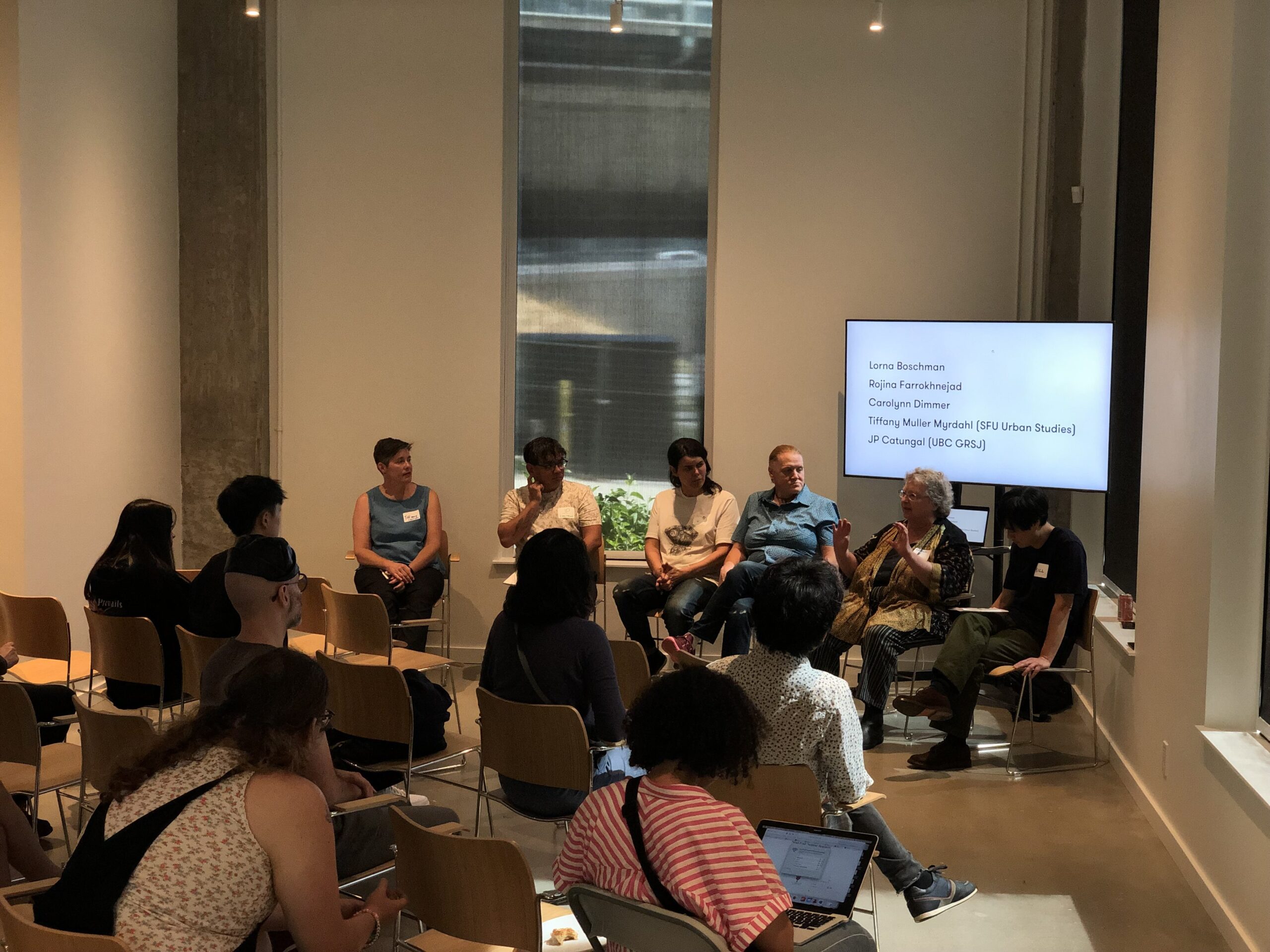
Image Credit: Ying Han
Together, led by our panel, we explored together questions of “What does it mean to be queer in Vancouver?” and “What would cultural representation of queer histories and heritage in the city entail?” In the following paragraphs, we invite you to explore the themes that came up in our discussions. The narrative format you see here comes from a compilation of notes taken by Ying, Eden, and fellow UBC student Yara Ahmed (UBC GRSJ) during the July 2025 event on ideas, stories, and direct quotes shared by the panelists and participants, and supplementary information and resources derived from additional research.
This is a living document and conversation, so we welcome you to contribute any thoughts you might also like to share here. Throughout this page, there will be multiple prompts with discussion questions and suggested activities. There will be space for you to submit your answers (in any form!) in the survey as well.
Note
Regarding additional research: some of the hyperlinks and suggested readings link to academic sources that may require access through an academic institution. They are meant as a starting point. We suggest searching with some of the keywords that appear in the title and abstract for more information.
Regarding terminology: throughout the text, the acronym 2SLGBTQIA+ (Two Spirit, Lesbian, Gay, Bisexual, Trans, Queer, Intersex, Asexual, and people who identify as part of sexual and gender diverse communities, who use additional terminologies) is used, alongside “queer” which–although historically has been used as a pejorative, has in recent decades been reclaimed by many–we mobilize as an umbrella term for the 2SLGBTQIA+ community [Government of Canada resource on common acronyms here].
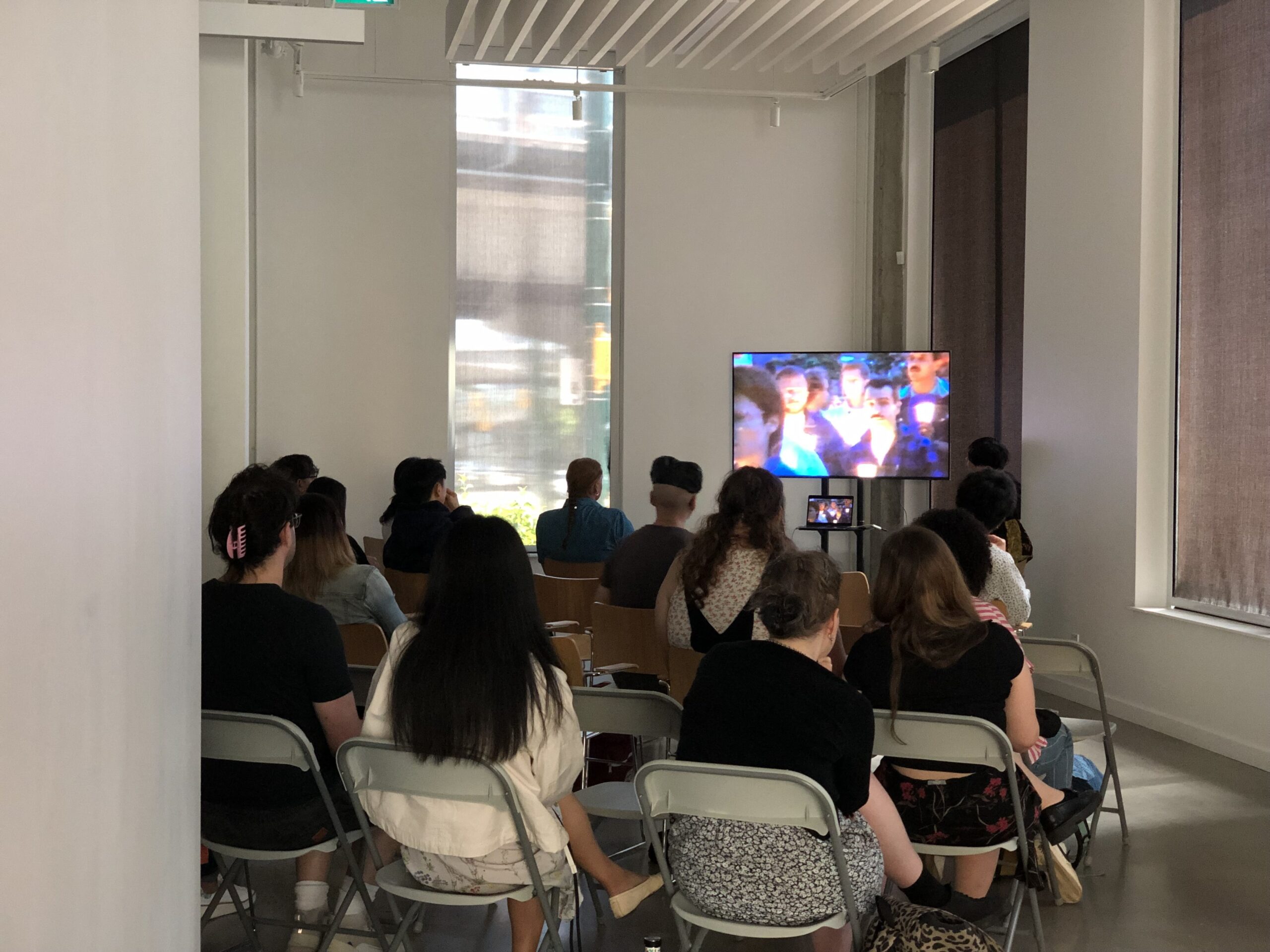
Image Credit: Ying Han
A Very Brief History of Little Sister’s
“Our store became our home, our everything.”
– Jim Deva in Little Sister’s vs. Big Brother, 00:02:25
Little Sister’s Book and Art Emporium [https://www.littlesisters.ca/] is an independent bookstore located in the West End neighborhood of Vancouver. Opened in 1983 by Bruce Smythe and Jim Deva, it has been a cornerstone of Vancouver’s queer community, serving as “Vancouver’s ‘grown-up general store,’” providing resources, goods, and most importantly, a physical space for marginalized folks to convene and share stories, knowledge, pains, and joys with one another.
The 1980s and 90s saw the height of the HIV/AIDS pandemic, when anti-LGBTQIA+ hate surged across North America as primary case reports were overrepresented by young, gay men and fear of the disease became quickly entwined with homophobia, discrimination, and shame. Little Sister’s, as a safe space for Vancouver’s Davie Village LGBTQ+ community to gather, became a target of anti-LGBTQ+ harassment and violence, from terrorist bombings to prolonged government harassment and censorship that landed them in the Supreme Court in 2000.
Starting in the 90s, Canada Customs had begun seizing materials, resources, and art on non-normative sexuality being imported by Little Sister’s on the grounds of obscenity. Following an extensive and expensive legal battle lasting two decades, Little Sister’s secured a difficult “partial victory” [1:04:20]. The court ordered that Canada Customs must stop discriminating against the materials Little Sister’s sought to import on the basis of sexuality (and therefore must “prove” these materials are obscene if Customs agents wanted to seize them); however the right of Customs to seize any materials they wanted, on the basis of “obscenity,” was maintained–which they did. Little Sister’s would continue experiencing these seizures at the border and fighting Customs in court until funding for this legal case ran out in 2007.
In 2002, celebrated filmmaker Aerlyn Weissman captured a part of this history in her documentary, Little Sister’s vs. Big Brother.
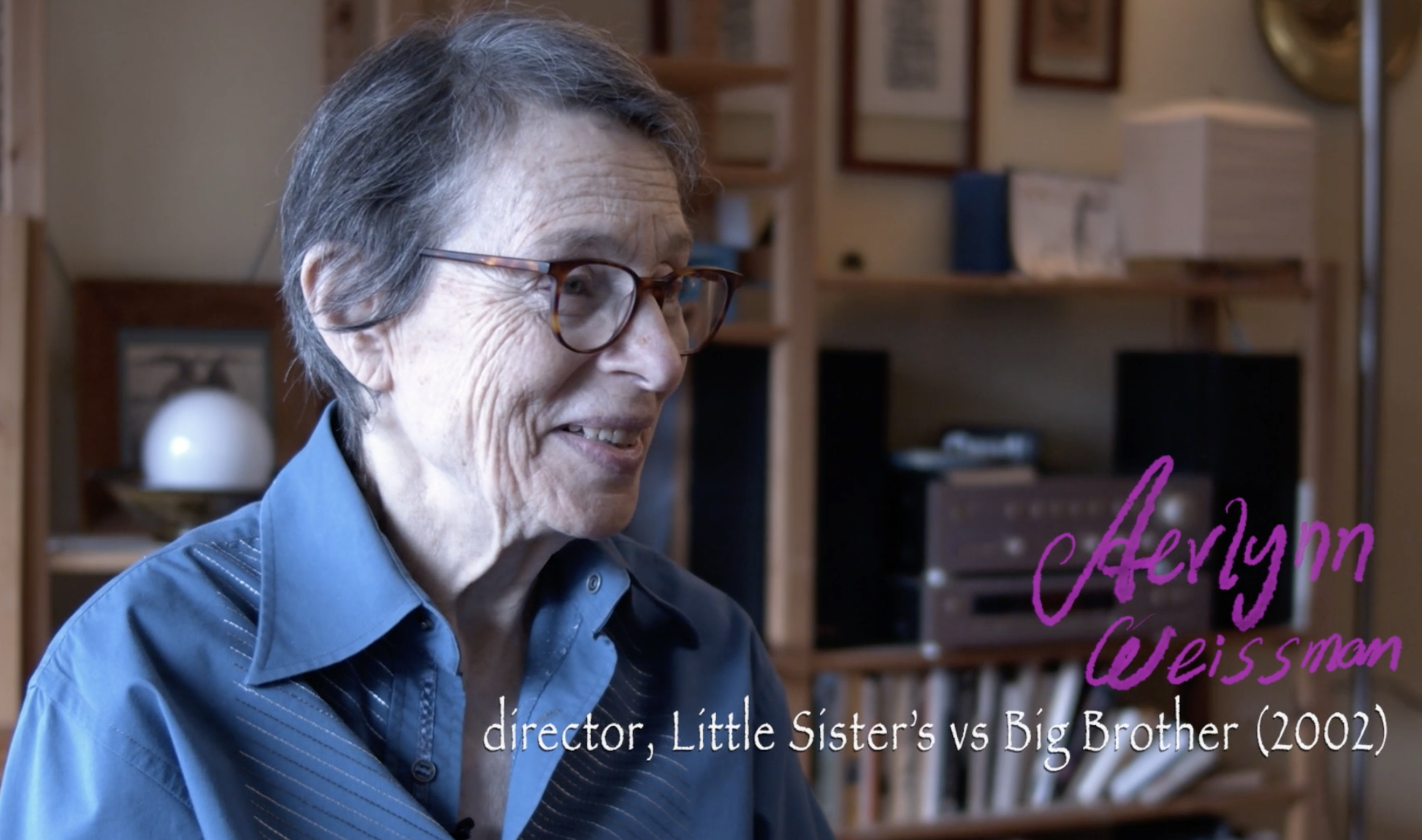
Image Credit: How I Got My Queer Back
Filmed over a ten year period, we hear from founders and staff of the bookstore, patrons, and the legal team in charge of the court case, the importance of Little Sister’s since the very beginning in building a sense of community for 2SLGBTQIA+ folks in Vancouver; as a hub for learning about sexuality and how to come out; as a resource for trustworthy, up-to-date information on the HIV/AIDS epidemic; and, during the court case, as an example of how concerns of national security can be mobilized for the purpose of policing and censoring whatever is deemed “immoral”–or, in other words, unconventional, nonnormative, queer.
“I think it’s always been more than a bookstore…it really started as a place where people could meet and form ideas, where every corner of the room would be a different faction of who and what we are as a community.”
–Janine Fuller in Little Sister’s vs. Big Brother, 00:18:25.
In 2016, a couple years after the passing of Jim Deva (1950-2014), Bruce Smythe decided to pass on leadership to a close friend of the bookstore, Don Wilson. Today, the bookstore continues to support the Vancouver 2SLGBTQIA+ community both from its current location on Davie Street and online, with books for queer audiences of all ages, reliable information on issues of health and wellbeing, and other daily necessities. In 2019, a new Vancouver Queer Heritage sign was installed, commemorating Little Sister’s impact in the city.
Discussion question: Have you ever been to Little Sister’s? What was in this space? What did you look at, hear, touch, or smell? What did this space feel like? What helped make it feel like that to you?
Little Sister’s Online Spaces
FURTHER READING
Learn more about the history of Little Sister’s
- From the people involved and their supporters:
- Restricted Entry: Censorship on Trial (Janine Fuller and Stuart Blakeley, Press Gang Publishers, 1996)
- “The Case Against Canada Customs,” in Forbidden Passages: Writings Banned in Canada (ed. Pat Califia, Cleis Press, 1995)
- What Right?: Graphic Interpretations Against Censorship (ed. Robin Fisher, Arsenal Pulp Press, 2002)
- In popular culture:
- Better Than Chocolate (dir. Anne Wheeler, 1995)
- News coverage:
- “A tale of two bookstores: CENSORSHIP / How Toronto’s Glad Day and Vancouver’s Little Sister’s survive decades of censorship” (Brent Ledger, Xtra! Magazine, 19 January 2006)
- “Little Sister’s Book & Art Emporium in Vancouver changing hands” (Andrea Woo, The Globe and Mail, 4 September 2016)
- “25 years ago, this LGBT landmark in Vancouver took on ‘big brother’ and won” (CBC, 20 October 2019)
- “Vancouver LGBTQ bookstore at centre of landmark legal case celebrates 40th anniversary” (CBC, 28 April 2023)
- Legal perspective
- “Little Sisters Book and Art Emporium v. Canada (Minister of Justice)” (Supreme Court of Canada)
- “Little Sisters Book & Art Emporium et al. v. Minister of Justice et al. (2000)” (Women’s Legal Education and Action Fund)
- Scholarly work
- Gay Male Pornography: An Issue of Sex Discrimination (Christopher N Kendall, 2004)
- Detained At Customs: Jane Rule Testifies at the Little Sister’s Trial (Jane Rule, 1995)
WHAT DOES ‘QUEER HERITAGE’ MEAN
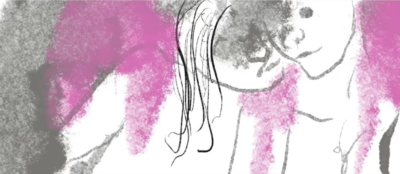
Image Credit: How I got My Queer Back
Heritage as a concept has been increasingly questioned in recent years as we have become more aware of who has historically been given the right to claim “heritage” and the imbalance in who has power to advocate for the form of heritage important to them. Only recently have government institutions such as Parks Canada, guided by the mandate to “protect and present nationally significant examples of Canada’s natural and cultural heritage,” begun foregrounding discussions on recognizing the ways in which certain histories, places, and peoples have been marginalized, rendered invisible, or forgotten.
When asked to share what queer identity looks like in (Metro) Vancouver, many participants commiserated upon shared stories of the people around them having viscerally negative reactions to queerness, especially coming from their own parents responding with disappointment, sadness, or anger. Indeed, queerness has often been conceptualized as not only a mental illness, but a physical one: some sort of infectious disease to be quarantined and evacuated from: “The gay is catching.” In fact earlier on during the HIV/AIDS epidemic, because these infections seemed to target gay men, the illness was originally given the official name “Gay Related Immune Deficiency (GRID),” further reinforcing and institutionalizing this pernicious misconception. The disease was only renamed in 1982 by the American Center for Disease Control as “Acquired Immune Deficiency Syndrome (AIDS)”.
| Activity: On a piece of paper, try to draw out what being “queer” looks or feels like to you. Is “queerness” represented by certain objects, symbols, or colors? Is it abstract shapes and lines? Try to do this with a friend and compare! |
In 1998, Vancouver had the largest HIV outbreak in North America. Throughout the 80s and 90s, Vancouver saw two large increases in the prevalence of HIV. In the 1980s, when the AIDS epidemic first hit North America, HIV was most prevalent among men who have sex with men. In the 1990s, the virus spiked again among people who use injection drugs and sex workers on the Downtown East Side. Vancouver’s AIDS epidemic victimized these two populations. During the epidemic in the 1980s and 90s, B.C. had the highest rate of HIV infection in Canada for its population size. In the early 2000s, HIV rates were six times more prevalent in Vancouver than they were in the rest of Canada.
For older participants, particularly those who lived through the HIV/AIDS epidemic as adults and the decades of discrimination both preceding and succeeding, highlighted the ability to connect over the “shitty, awful experiences” and developing community that way as a key part of what defines queer heritage. One participant, when thinking back to the film and how it was made in 2001/2002, and the two and a half decades since, reflects on how they are surprised they are still alive and were able to “figure everything out for [themselves]”–from finding community to dating. The most important part of “queer heritage,” many participants agreed, has been empathy: nurturing it within ourselves and others.
Queer history–as an accumulation of voices, perspectives, and experiences often oppressed by Canada’s ongoing “legacies of colonialism, patriarchy, and racism” (Parks Canada)–is now often represented by what JP Catungal named during the panel event, moments of the “spectacular.” What is usually represented in popular culture or mainstream media are the big protests, marches, memorials–often stitched together as a linear narrative of progress. However, participants all generally agreed that there seems to be a shift in the current cultural moment towards more conservative policymaking and sentiment, particularly against queer and trans rights.
| Activity: If societal “progress” is not linear, what would it look like? Try to draw an alternative depiction of progress using lines, shapes, squiggles. What are the implications of the shape of progress that you drew? |
It is in the everyday that we can perceive most clearly that there has never been a straightforward, linear progress towards more open-minded, progressive ideas around gender and sexuality. JP further shared that it is also in the everyday “smaller, tender moments” where queer heritage is constantly made, shaped, and practiced.
Image Credit: How I got My Queer Back
So, where are the spaces in which these smaller, tender moments are made possible? Rather than being relegated solely into the hidden, clandestine, or private, participants emphasized a need for queer, accessible spaces. Perhaps even more pressing than defining “queer heritage,” is a need to sustain it.
| Discussion question: In what ways do you think stories, histories, identities of queer communities can be expressed as a part of the city and city planning? (This could include cultural practices, laws, social networks, physical locations, organizations, events, festivals, infrastructure for the communities.) |
PHYSICAL SPACES
Especially for a city such as Vancouver, infamous for its high cost of living and housing crisis, has forced a migration out of historically queer communities in the West End, as spaces of gathering, living, and thriving have been destroyed and gentrified. Participants spoke fondly of old bars like the Odyssey Nightclub and Dufferin Hotel, that were critical in holding, cultivating, and celebrating those otherwise clandestine moments of queer intimacies and joy – that now only exist in memory. While there are indications that Vancouver seems to be working towards being more inclusive of its 2SLBTQIA+ community through both symbolic gestures of representation (e.g., rainbow sidewalks, flying rainbow flags at City Hall) and movement towards more meaningful changes (e.g., creating consultation groups such as the Trans and Gender-Variant Inclusion Working Group in 2013 and the extant 2SLGBTQ+ Advisory Committee)–how can people continue to live and survive in cities as it becomes increasingly made unaffordable? What kinds of infrastructure is needed to maintain and sustain queer spaces? How can we nurture a sense of empathy within the spaces we occupy?
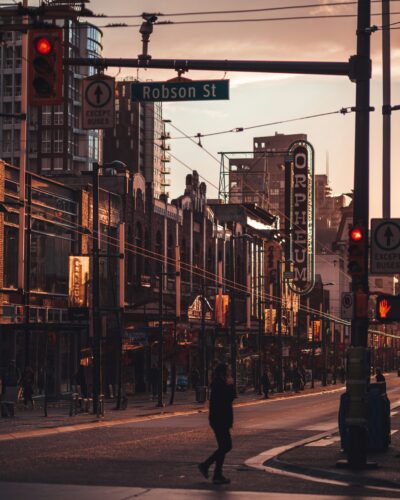
Image Credit: Thomas Williams
Urban spaces have often been shaped through resilience and resistance, into safe havens for queer folks to commune and support one another. Thinking about the role Little Sister’s played and continues to play in the community, participants also reflected on the importance of physical spaces. One participant shared that they didn’t have any prior knowledge about queer culture in Vancouver before hearing about Little Sister’s, learning of its role as a bookstore and hub for the LGBTQIA+ community, and the changing forms of queer gathering both online and offline: “You are not going to hear about Vancouver queer history when you are online … the communities [online] are mostly global.” Discussions unfolded around what places are seen as deserving of a plaque, what history has been erased, and what still remains visible despite development and gentrification–in physical markers like rainbow flags that look like they have stood the test of time, or stories shared by those who continue to carry important cultural memory of past spaces, intimate and everywhere.
| Activity: Draw a map of your community. Where are some public spaces you like to hang out the most? What identities do you usually express in these spaces? How does being in those spaces make you feel? |
INTERWOVEN STORIES
Image Credit: Robert Clark
In our discussion groups, there was a mix of newcomers to Canada, transplants from other cities, visitors, folks who grew up in Vancouver, or have lived here for a long time. As participants traded stories, one noted how it was interesting to reflect on physical location and local history, and the city, for example: the West End Sex Workers Memorial, the AIDS ward in St. Paul’s hospital, the former bath house on Second Beach that used to be open in the 80s, Joe’s Cafe on the Drive. While these places may no longer exist, “There are places all over. The more I know about the history of queerness in the city, the more I see it.”
Other participants shared their perspectives as immigrants and experiences of tensions between queer identity and immigrant identity. One participant shared: “I feel [as] an immigrant family, we should be open to cultural exchange, but what I see my parents are being fed is dislike for other immigrant communities.” The circulation of misinformation and language barriers can often feed into a fear. Together, folks talked through how a lot of contemporary North American politics seems to be driven by moral panic, fearmongering, and “truth decay,” especially targeting trans people (sometimes even within the queer community).
Another participant shared the unconscious bias they sometimes carry against their diasporic community, having experienced homophobia and transphobia within their previous cultural context. They reflected on both the emotional labor required of needing to be the one to extend an invitation to communicate and understand one another, as well as the empathy that invitation can generate. On the other hand, they also came to realize that despite Canada’s overall reputation as being more progressive in some ways than a lot of other places, there are still many other histories and forms of discrimination that need to be brought to light and redressed. We can think of Canada’s very recent history of residential schools, rising xenophobia, Islamophobia, amongst countless other issues. They expressed how, “When I first came to Canada, I felt that everything is accepted and supported, but when I lived longer here, I realized that it was bad in a different way.”
| Discussion question: What are some conversations you have been having with friends, family, community members about Vancouver? This could include the good and the bad. |
Within these stories, participants discussed how queerness, being open to other cultures, housing affordability, and environmentalism–all these topics are intimately related. As anti-LGBTQIA+ violence seems to be rising in Canada and worldwide and life feels increasingly precarious in Vancouver, the desire and need to “make history” through creating new spaces to hold one another, make memories together, and learn from each other becomes more and more potent.
For many living in Vancouver in the 1980s and 90s, Little Sister’s played that role. Through the materials curated by Jim Deva, Bruce Smyth, Don Wilson, and others, community members were exposed to everyday objects, ideas, and vocabularies of “queerness.” And even from just the diversity of the people involved in the making of “How I Got My Queer Back,” we can see how Little Sister’s became a place where folks from all different perspectives and backgrounds gathered. Within the bookstore, the embodied experience of being queer was encouraged and celebrated–and the event space itself turned into an extension of this energy. As one of the people featured in the short film noted during the panel: “We are not a phenomenon… We are history, we are making history just by sitting here today. It is such a bigger project.”
How can we continue to preserve, commemorate, and pass on this heritage?
| Discussion question: Go back to the map you drew of your community. What is a public space that has been important to you in Vancouver? What kinds of people do you usually see there? Have you ever had a conversation there with a stranger? What kinds of community does that place foster, and how? |
Learn more
- “Queer-What-You-Can: Queer community organizing in a gentrifying East Vancouver” (Alexandra Toland, MA Thesis, SFU Urban Studies).
- “Routes to Roots: Building a community in Vancouver with LGBTQ newcomers and refugees” (Program led by Danny Ramadan with Qmunity, drop-ins for LGBTQ newcomers and refugees)
- “‘Undone: A Newcomer’s Story’ Had a Tragic End. We Asked How Things Could Have Been Different” (Katie Hyslop, 2 August 2019, The Tyee)
- “Gender is not an ideology – but conservative groups know learning about it empowers people to think for themselves” (Victoria Pitts-Taylor and Elizabeth Anne Wood, 21 October 2025, The Conversation)
- “The collective trauma of HIV/AIDS and contemporary constructions of health: Older gay men’s perspectives” (Ingrid Handlovsky, et. al.; 2024, SSM – Qualitative Research in Health)
- “GL vs. BT: The Archaeology of Biphobia and Transphobia Within the U.S. Gay and Lesbian Community” (Jillian Todd Weiss in Bisexuality and Transgenderism, 2004)
Community Contributions
Please check back for updates as we start adding contributions from our readers (you!) via this survey.
Acknowledgements
Written and prepared by Ying Han (UBC Asian Studies, MA) and Eden Colley (UBC iSchool, Master’s student), with Bill Yuen and Yara Ahmed (UBC GRSJ, PhD Student).
Panelists:
- JP Catungal (UBC GRSJ, Assistant Professor, Faculty partner)
- Tiffany Muller Myrdahl (SFU, Urban Studies, Lecturer; Gender, Sexuality, & Women’s Studies, Lecturer and Director)
- Lorna Boschman
- Rojina Farrokhnejad
- Carolynn Dimmer
Advisor:
- Sydney Lines (UBC English, PhD Candidate)
Funded by:
- UBC Arts Amplifier, Collaborative Cohort Project (Summer 2024, Fall 2024, Summer 2025)
- UBC StEAR Fund